
Major Celestial Events to Watch in 2026
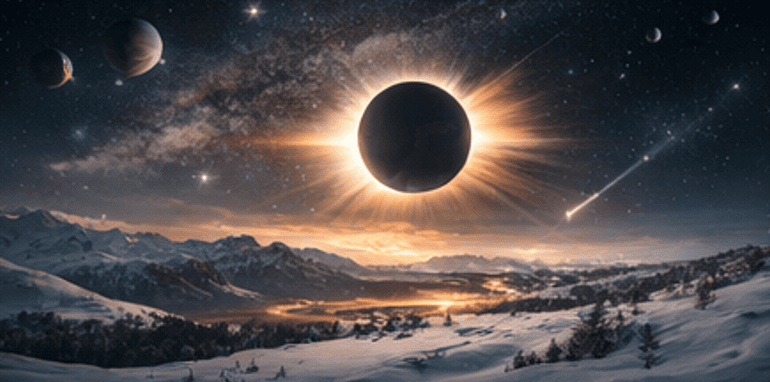
(Disclaimer: AI-generated visuals created to represent real news events in a symbolic and editorial context.)
The coming year promises a bumper crop of astronomical spectacles that professional scientists and casual stargazers alike won’t want to miss. In 2026, the night sky will host a series of high-profile events, including three supermoons, multiple eclipses, and rare planetary alignments that offer stunning visual and scientific opportunities.
The celestial calendar opens with a full supermoon in January, when the Moon appears particularly large and bright due to its close approach to Earth. Throughout the year, enthusiasts can also look forward to an annular solar eclipse, a total lunar eclipse (sometimes called a Blood Moon), and even a total solar eclipse cross-singing Greenland, Iceland, and parts of Europe on August 12th.
In between these dramatic eclipse events, other highlights include planetary oppositions (such as Jupiter at its brightest), aurora displays tied to solar activity, and multiple meteor shower peaks providing dynamic skywatching experiences that require little more than clear skies and curious eyes.
These occurrences offer not just beautiful sights, but prime moments for scientific observation and education. They also serve as excellent entry points for youth and astronomy clubs to engage in community stargazing, photography, and citizen science participation throughout the year.